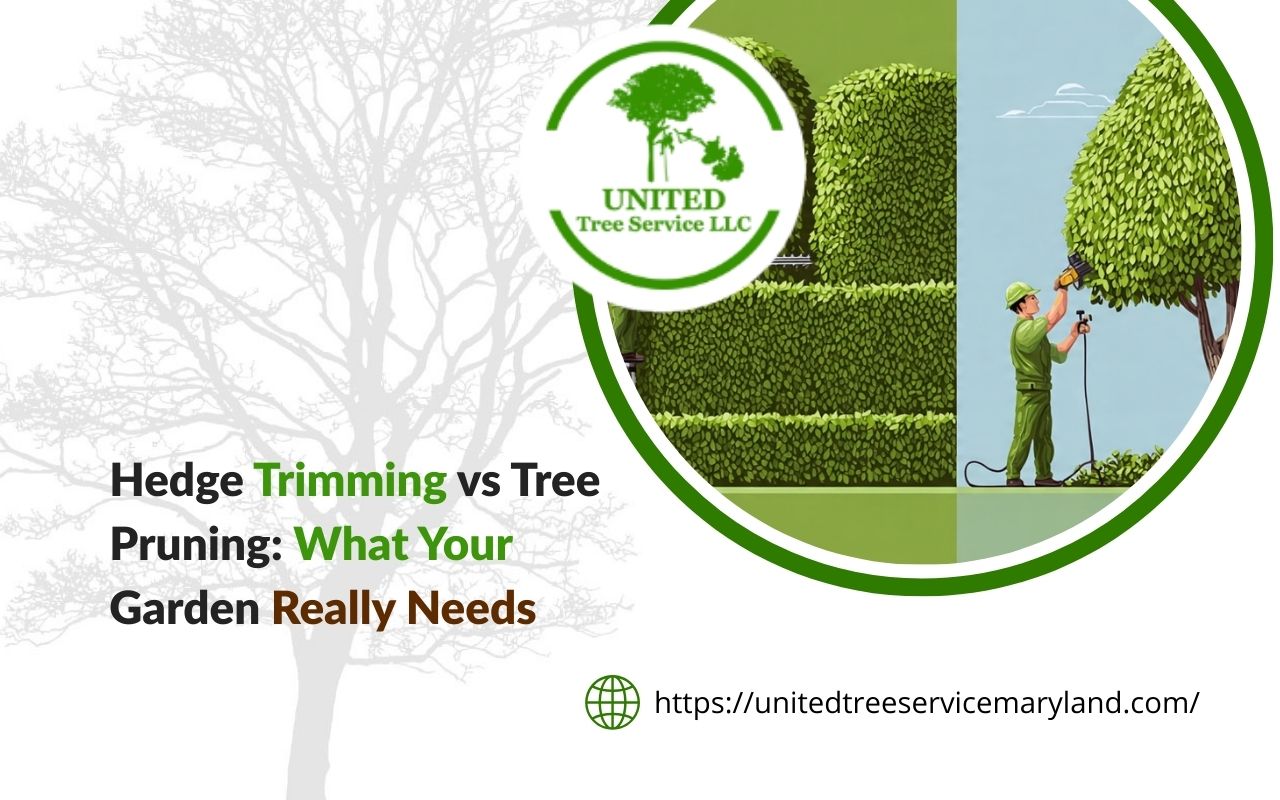
Deciding how best to care for your garden can feel overwhelming, especially when it comes to hedge trimming and tree pruning. These tasks seem similar, yet each plays a different role in plant health and garden style.
If you wonder how shearing, thinning cuts, growth response, or crown cleaning affect your landscape, you are not alone. Hedge trimming vs tree pruning can transform your yard when you understand what to do and when.
The Importance of Hedge Trimming
Maintaining a neatly trimmed hedge offers more than curb appeal. It keeps plants healthy and supports fresh growth. Regular care also prevents overgrowth that can turn hedges into messy barriers.
When you compare hedge trimming vs tree pruning, hedge work is often simpler, yet still important. It boosts airflow and light, so inner leaves stay stronger. United Tree Service, LLC often sees that steady trimming reduces pests and lowers fungal risk.
- Helps keep a clean and even shape
- Improves airflow to reduce moisture problems
- Lets sunlight reach inner growth
- Supports privacy and structure in the yard
Benefits of Tree Pruning
Pruning helps trees stay healthy and safer over time. By removing dead, weak, or rubbing limbs, you lower the risk of damage during storms. As a result, trees often build stronger structure.
Tree pruning also improves light and airflow through the canopy. That balance helps reduce disease and supports healthy leaves. United Tree Service, LLC often uses pruning to guide growth response and create a fuller, cleaner crown.
- Reduces risk from dead or weak limbs
- Improves canopy airflow and light
- Supports a better growth response
- Helps create a balanced shape
Hedge Trimming Techniques
When it comes to hedge trimming vs tree pruning, the method matters because hedges and trees grow differently. For hedges, shearing is often used to keep a crisp, even outline. This approach trims the outer layer to shape the hedge.
However, hedges can also benefit from light thinning cuts to reduce crowding inside. That way, the plant stays dense without trapping moisture. For more guidance on trimming timing and technique, see tree trimming and care tips from United Tree Service, LLC.
- Shearing to maintain a neat outline
- Thinning cuts to reduce crowding and boost airflow
- Stepping back often to keep lines even
- Cleaning blades to limit disease spread
Tree Pruning Methods
Tree pruning uses more targeted cuts than hedge work. Thinning cuts remove select branches to improve airflow and light inside the canopy. Crown cleaning removes dead, diseased, or crossing branches, which supports long-term strength.
Although shearing can shape hedges fast, trees need careful cuts that respect their structure. United Tree Service, LLC often focuses on crown cleaning first, and then uses thinning cuts to guide growth response without stressing the tree.
Tools Required for Hedge Trimming
Good results start with the right tools. Manual hedge shears work well for small hedges and fine shaping. Electric trimmers help with larger hedges because they save time and energy.
In addition, protective gear matters. Gloves and eye protection reduce injuries from thorns and flying debris. Bypass pruners and loppers also help with thicker stems and controlled thinning cuts.
- Manual hedge shears for control and detail
- Electric hedge trimmer for speed on bigger hedges
- Gloves and eye protection for safer work
- Bypass pruners and loppers for thicker growth
Tools Required for Tree Pruning
Tree pruning needs stronger tools and more safety gear. Loppers handle smaller limbs, while a pruning saw is better for larger branches. Pole pruners help you reach higher growth without climbing.
Safety equipment is just as important. A hard hat, sturdy boots, and eye protection reduce risk when working under branches. If you need local help with higher limbs, United Tree Service, LLC supports homeowners in the area, including tree trimming services in Glen Burnie, MD.
Best Practices for Hedge Trimming
Timing and technique keep hedges dense and healthy. Many hedges do well with trimming in late spring and again in mid-summer. However, heavy cuts late in fall can lead to winter damage.
Start trimming at the base and work upward so sunlight reaches lower branches. Also, using a mix of shearing and thinning cuts supports better airflow and helps avoid bare patches.
- Trim in late spring, then refine in mid-summer
- Work from bottom to top for better light access
- Use thinning cuts before light shearing
- Water after trimming to support recovery
Best Practices for Tree Pruning
Most trees respond best to pruning in late winter or early spring while they are dormant. At that time, pests are less active, and branch structure is easier to see. Remove dead, damaged, or crossing limbs first.
Always cut to the branch collar, because it helps the tree seal the wound. Avoid flush cuts and stubs. United Tree Service, LLC often recommends spacing major pruning over time so trees recover without shock.
- Prune most trees in late winter or early spring
- Remove dead, broken, and rubbing branches first
- Cut to the branch collar for cleaner healing
- Spread major pruning across seasons if needed
Frequently Asked Questions
What is the biggest difference in hedge trimming vs tree pruning?
Hedge trimming shapes the outside for density and form, while tree pruning removes specific limbs to improve structure, safety, and health.
Is shearing bad for hedges?
Shearing is helpful for formal shape. However, adding occasional thinning cuts can improve airflow and reduce disease risk.
What are thinning cuts used for?
Thinning cuts remove select branches to open space for light and air. They are common in trees and can also help crowded hedges.
What does crown cleaning mean?
Crown cleaning removes dead, diseased, or crossing branches. As a result, the tree canopy stays safer and healthier.
How does pruning affect growth response?
Proper pruning can guide growth response by directing energy into stronger branches. However, removing too much at once can stress the plant.
When to Hedge Trim vs. When to Tree Prune
Knowing the right season matters for hedge trimming vs tree pruning. Hedges do best during active growth, such as late spring and early summer. That way, new shoots fill in quickly after shaping.
Trees often respond best during dormancy, which is usually late winter to early spring. This timing lowers pest pressure and helps healing. If a branch is unsafe, remove it right away, regardless of season.
Enhancing Your Garden with Proper Care
When you use the right method at the right time, your yard becomes easier to maintain. Shearing a hedge and crown cleaning a tree each support a stronger landscape. Over time, you will also see better shape and healthier growth.
If you want support planning the best approach, United Tree Service, LLC can help. To discuss your yard goals and the best timing, visit the contact page for United Tree Service, LLC.