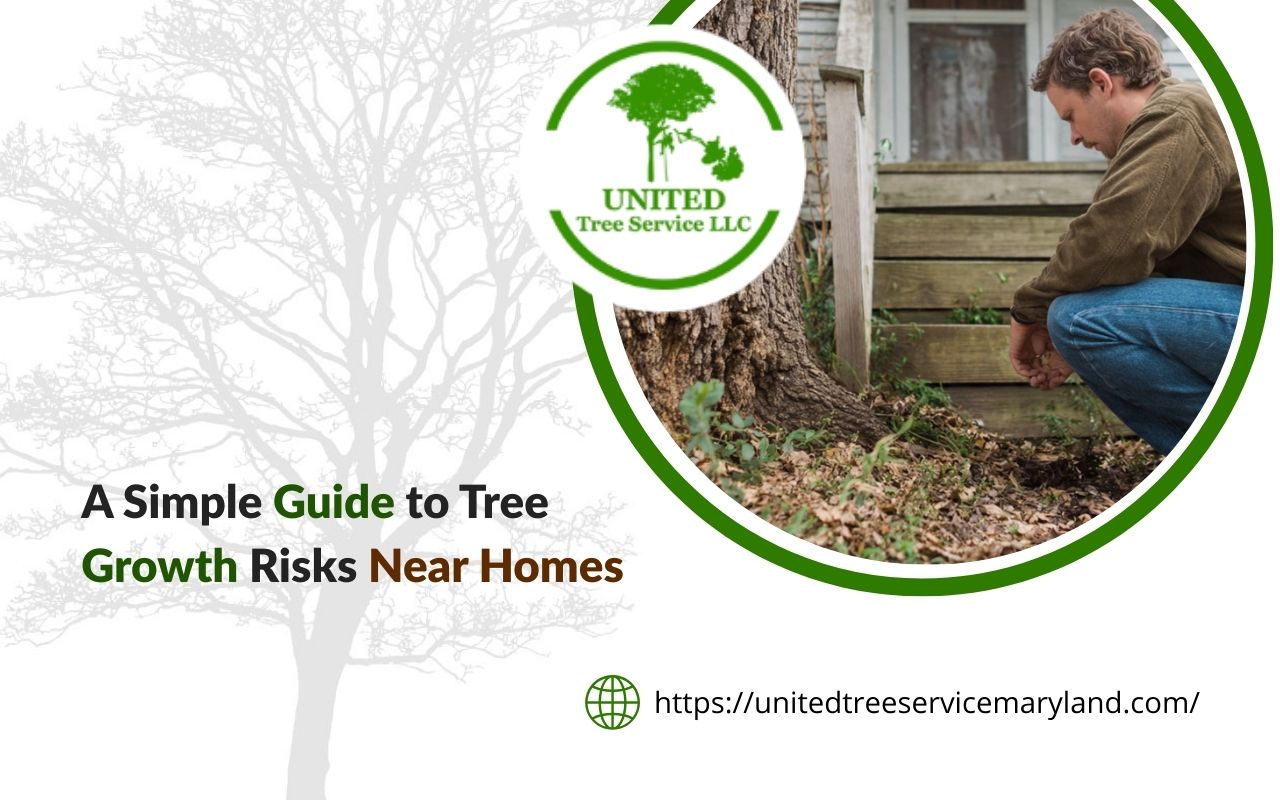
Tree growth risks near homes can affect your roof, walls, and yard. United Tree Service LLC helps homeowners spot these issues early and act before damage grows.
Trees give shade and beauty. However, roots and branches can also create safety problems near your house. This guide explains what to watch and what steps can help.
How to Spot Tree Growth Risks Near Homes
Walk around your yard each season and look at every tree near the house. Check how close trunks, roots, and branches are to walls, gutters, windows, and power lines.
Measure the space from the trunk to the home. If you see trees too close to house areas, make notes and track changes over time.
- Look for low branches over the roof.
- Check for roots near driveways and walkways.
- Notice leaning trunks or uneven canopies.
How Trees Can Affect Your Home Structure
Trees can slowly change the area around your home. Roots may move toward water, while branches can drop leaves and debris onto the roof.
United Tree Service LLC often helps homeowners understand can tree roots damage a foundation and how nearby growth may affect walls, gutters, and slabs.
Signs That Show Tree Damage Around Your Home
Small signs can point to bigger trouble. Cracks in concrete, stuck doors, wet basement spots, and lifted pavement may all show root movement.
You can also review common warning signs in how to detect root problems around your property to catch issues before repairs become harder.
- Cracks in the foundation or mortar.
- Raised sidewalks or uneven paths.
- Damp areas near basement walls.
Why Overhanging Branches Need Fast Attention
Branches above the roof can become dangerous in wind, rain, or ice. Even medium limbs can break shingles, bend gutters, or hit cars and windows.
Keep branches several feet away from the roofline. As a result, you lower the chance of impact and make tree checks easier.
Foundation Tree Risks and Root Pressure Warning Signs
Foundation tree risks often start below the ground. Roots may follow moisture near pipes or walls, then push against concrete as they grow.
To learn more about root movement, see learn how tree roots causing damage affect property. This helps homeowners understand how pressure builds near key support areas.
When Tree Removal Near Home Becomes Necessary
Some trees are no longer safe to keep. A dead tree, a severe lean, deep trunk cracks, or major decay can raise the risk of failure.
In these cases, tree removal near home may be the safest choice. Tree growth risks near homes should never be ignored when a tree can fall on people or property.
- Remove trees with major decay.
- Act when roots threaten key structures.
- Call for help after storm damage.
Simple Steps That Help Prevent Future Problems
Good care lowers risk and keeps trees healthier. Prune on time, clear leaves from gutters, and keep mulch away from the trunk and foundation.
You can also read helpful root removal tips for safer yards and see how roots damaging sidewalks create hazards for more practical ideas.
Frequently Asked Questions About Tree Safety Near Homes
How close is too close for a tree near a house?
The answer depends on the tree type and size. In many cases, large trees planted near walls or slabs need careful review.
Can roots really crack a foundation?
Yes, roots can add pressure near weak points. Tree growth risks near homes increase when soil stays wet and roots move toward the structure.
What are common signs of root trouble?
Look for cracks, uneven paths, stuck doors, and wet areas. These changes may point to movement below the ground.
When should I call an arborist?
Call when you see dead limbs, trunk damage, or a tree leaning toward the house. Early advice can prevent bigger issues.
Is removal always the only answer?
No, not always. Pruning, root control, and regular care may solve the problem before removal is needed.
Keep Your Home Safe With Smart Tree Care
Regular checks, simple care, and expert advice can protect your home for years. Tree growth risks near homes are easier to manage when you act early.
United Tree Service LLC can help you review trees too close to house areas and decide on the best next step. For direct support, visit the Contact United Tree Service LLC for tree safety help page.