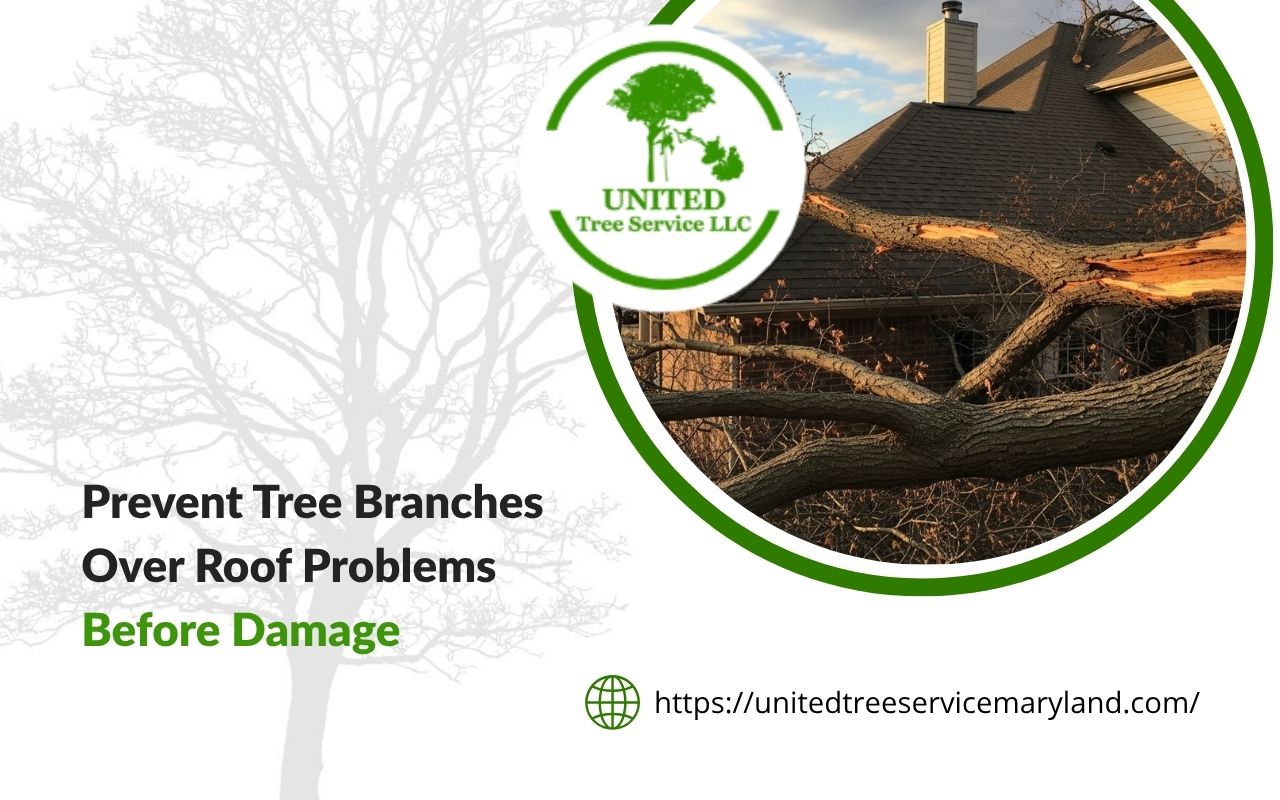
Tree branches over roof areas may look harmless, yet they can lead to roof wear, clogged gutters, pests, and leaks. When limbs stay too close, they can rub shingles, drop debris, and create weak spots during storms.
At United Tree Service LLC, we help homeowners take simple steps before small branch issues become costly repairs. With steady care, your roof can stay cleaner, safer, and better protected year-round.
Why Overhanging Limbs Can Put Your Roof At Risk
Branches touching roof surfaces can scrape away the top layer of shingles. As a result, rain may reach areas that should stay sealed. This can lead to leaks, soft wood, and roof stains over time.
Tree limb roof damage can also happen when weak limbs fall during wind or heavy rain. In addition, leaves and twigs can block gutters, which pushes water toward the roof edge instead of away from the home.
Simple Ways To Spot Branches Before Trouble Starts
A quick walk around your home can show where tree branches over roof lines are becoming a concern. Look from the ground and check if limbs hang low, brush shingles, or sit close to gutters.
- Check for dead, cracked, or hanging branches after storms.
- Look for leaves building up in gutters or roof valleys.
- Watch for squirrels, ants, or birds using branches as paths.
- Notice branches that move toward the roof during windy days.
Safe Trimming Steps That Protect Nearby Roof Areas
Tree trimming near house areas must be done with care. Clean cuts help the tree heal better, while poor cuts can leave weak spots. For small branches, sharp hand tools may be enough when the work is easy to reach.
- Trim small limbs before they press against shingles.
- Cut outside the branch collar to support healthy healing.
- Never place a ladder directly on fragile roof areas.
- Leave large or high limbs to trained tree professionals.
For safer help with trimming, our tree trimming team in Baltimore can manage branches near the roof without putting your home at risk.
When Professional Tree Care Makes Better Sense For Homes
Some tree branches over roof areas are too large, too high, or too close to power lines. In these cases, professional help is the safer choice. Heavy limbs can shift quickly and cause injury or property damage.
United Tree Service LLC uses careful planning before cutting near homes. We check limb weight, tree health, and roof distance, then choose the safest way to reduce risk. You can also review our tree care trimming options for more guidance.
Roof Protection Habits That Support Stronger Trees Each Season
Tree care works best when it is part of a regular home routine. Check your roofline in late winter and again during summer. Therefore, you can spot weak limbs before storms make them more dangerous.
Gutter cleaning also matters because leaves and twigs can trap water. If you already see signs of tree limb roof damage, our tree damage support services can help you choose the next safe step.
Common Branch Management Mistakes Homeowners Should Avoid Near Roofs
Tree branches over roof problems often get worse when trimming is rushed. Cutting too much at once can stress the tree. Also, leaving broken stubs may invite decay and future limb failure.
- Avoid removing too much green growth in one visit.
- Do not ignore cracked bark, deadwood, or sudden leaf loss.
- Do not let branches touching roof areas stay in place.
- Avoid cutting large limbs without proper safety tools.
Frequently Asked Questions
How close can branches be to my roof?
Branches should not touch or rub the roof. A safe gap helps stop scraping, pests, and falling debris. The best distance depends on the tree size, roof shape, and branch movement during wind.
Can small branches really damage shingles?
Yes. Small branches can scrape shingles when they move in the wind. Over time, this can wear down the surface and allow water to reach areas that should stay protected.
Should I trim branches myself or call professionals?
You may handle small, low branches if you can work safely from the ground. However, large limbs, high cuts, or branches near the roof should be handled by trained professionals.
How often should roofline trees be checked?
Most homes benefit from checks twice a year. You should also inspect trees after strong wind, heavy rain, or snow, especially when limbs hang above the roof.
Can tree trimming help prevent pest problems?
Yes. When branches stay away from the roof, pests have fewer easy paths to gutters, vents, and attic spaces. This can help keep your home cleaner and safer.
Keep Your Home Safer With Planned Tree Care
Managing tree branches over roof areas early helps protect shingles, gutters, and attic spaces. It also lowers the chance of sudden damage during storms and keeps your home looking neat.
We help with careful trimming and branch control. For service in nearby areas, visit our Glen Burnie tree service page or reach us through our contact page.