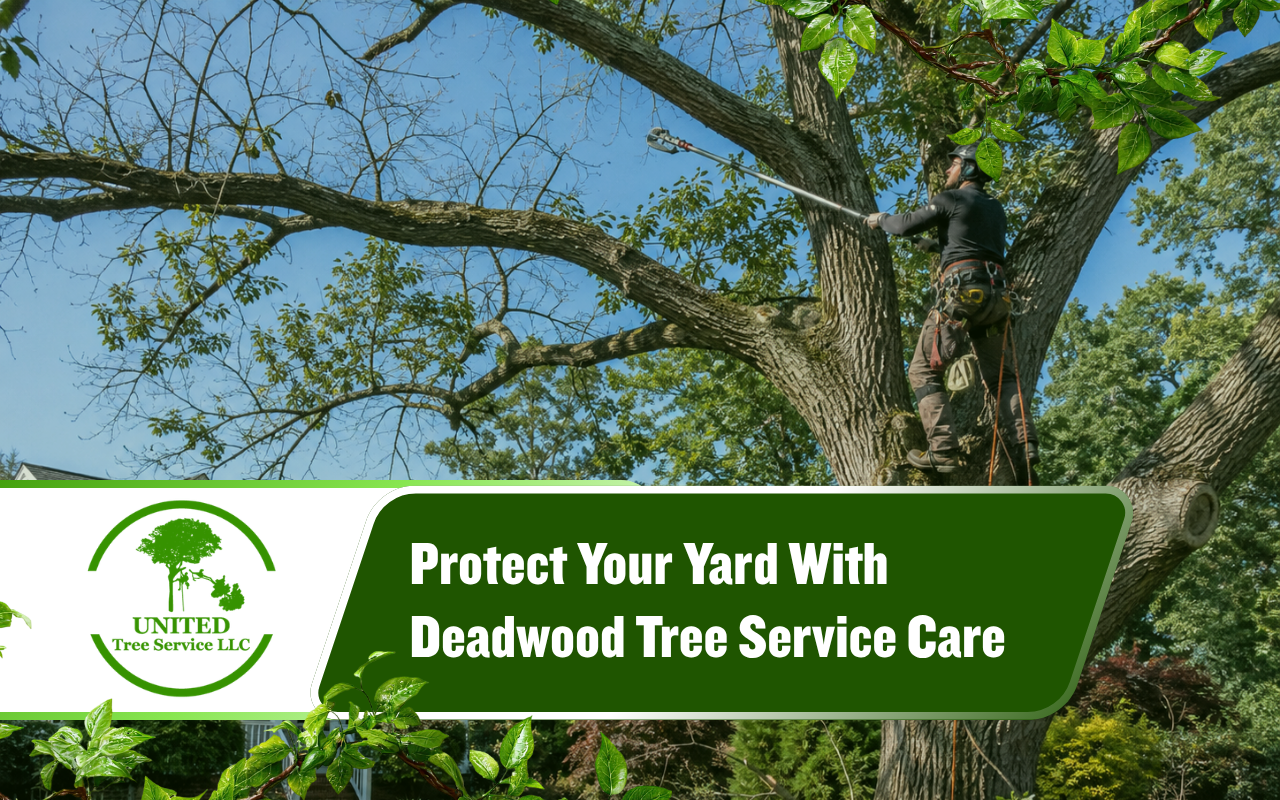
Dead branches can make a healthy yard look neglected, but appearance is only part of the problem. A timely deadwood tree service removes weak limbs before they fall, spread decay, or create avoidable risks around your home.
At United Tree Service, LLC, we focus on safe care that supports stronger trees and a cleaner landscape. With the right pruning plan, old growth is removed while healthy branches have more room for light, air, and steady development.
Deadwood Removal Supports Safer, Healthier Outdoor Spaces
Dead limbs often become weaker as weather, insects, and decay affect the wood. During wind or heavy rain, they may break without warning. Regular dead branches removal lowers this risk and helps protect people, roofs, vehicles, fences, and other parts of your property.
A deadwood tree service also improves tree health by clearing damaged areas that may attract pests or disease. For more guidance on common hazards, review our guide to dead tree risks.
Common Warning Signs That Dead Branches Need Attention
Some deadwood is easy to notice, while other signs are less clear from the ground. Seasonal changes can also make healthy and damaged branches look similar, so careful inspection matters before any cutting begins.
- Branches stay bare while nearby limbs grow leaves.
- Bark becomes loose, cracked, or starts falling away.
- Wood looks dry, dark, hollow, or badly damaged.
If these signs appear after severe weather, our tree damage solutions explain what to check next and when professional help may be the safer choice.
Proper Pruning Encourages Stronger Growth And Tree Balance
Deadwood pruning removes branches that no longer support the tree. This opens space in the canopy and helps healthy limbs receive better airflow and sunlight. Careful cuts can also reduce extra weight and improve the tree’s overall shape.
At United Tree Service, LLC, we use professional tree trimming methods that protect healthy wood and avoid unnecessary cuts. Our tree trimming guidance covers why correct timing and careful branch selection matter.
Professional Service Reduces Risk During Difficult Tree Work
Large limbs, tall trees, and branches near buildings can make deadwood pruning dangerous. Trained crews know how to plan each cut, control falling sections, and work around nearby structures without creating new hazards.
- Proper tools allow cleaner and more controlled cuts.
- Safety gear helps reduce exposure to falling debris.
- Careful planning protects nearby landscaping and structures.
A deadwood tree service is especially useful when damaged branches are high, heavy, or hard to reach. In these cases, professional support can prevent unsafe ladder use and poor cuts that weaken the tree.
Safe Cutting Methods Protect The Tree From Damage
Good pruning starts with identifying the branch collar, which is the raised area where a limb joins the trunk or a larger branch. Cuts should stay outside this area so the tree can close the wound naturally.
For local service needs, our Baltimore tree trimming information explains how professional tree trimming supports safer branch removal. A careful approach also avoids tearing bark or leaving long stubs that can collect moisture.
Simple Aftercare Helps Trees Recover After Branch Removal
After dead branches removal, basic care can support steady recovery. Most trees do not need wound paint or sealant after correct pruning. Instead, keep the root area healthy and watch the canopy for new signs of stress.
- Water during long dry periods when the soil needs moisture.
- Add mulch without piling it against the trunk.
- Check for new cracks, decay, pests, or broken limbs.
Regular checks make future problems easier to catch. They also help you decide when another deadwood tree service may be needed instead of waiting for a damaged branch to fall.
Frequently Asked Questions
How often should deadwood be removed from trees?
Most trees benefit from regular inspections, especially after storms or strong winds. The right schedule depends on tree age, condition, species, and location.
Can dead branches harm healthy parts of trees?
Yes. Dead wood can attract insects, hold decay, and create weak areas where damage may spread into living parts of the tree.
Is deadwood pruning safe for every season?
Many dead branches can be removed when found, but timing may depend on the tree type, weather, and the amount of work needed.
Should homeowners remove large dead branches themselves?
Large or elevated limbs can be dangerous to cut. Professional help is safer when branches are heavy, near structures, or difficult to reach.
What makes professional pruning better for tree health?
Correct cuts protect healthy tissue, reduce unnecessary damage, and keep the tree’s natural structure in better balance during the removal process.
Build A Safer Yard With Consistent Tree Care
Healthy trees need regular attention, especially when deadwood begins to form. Removing weak branches early supports a cleaner canopy, lowers property risks, and helps the landscape stay strong through changing weather.
With United Tree Service, LLC, you can get clear guidance before the work begins. For deadwood tree service support, connect with us to discuss the safest next step for your yard.