
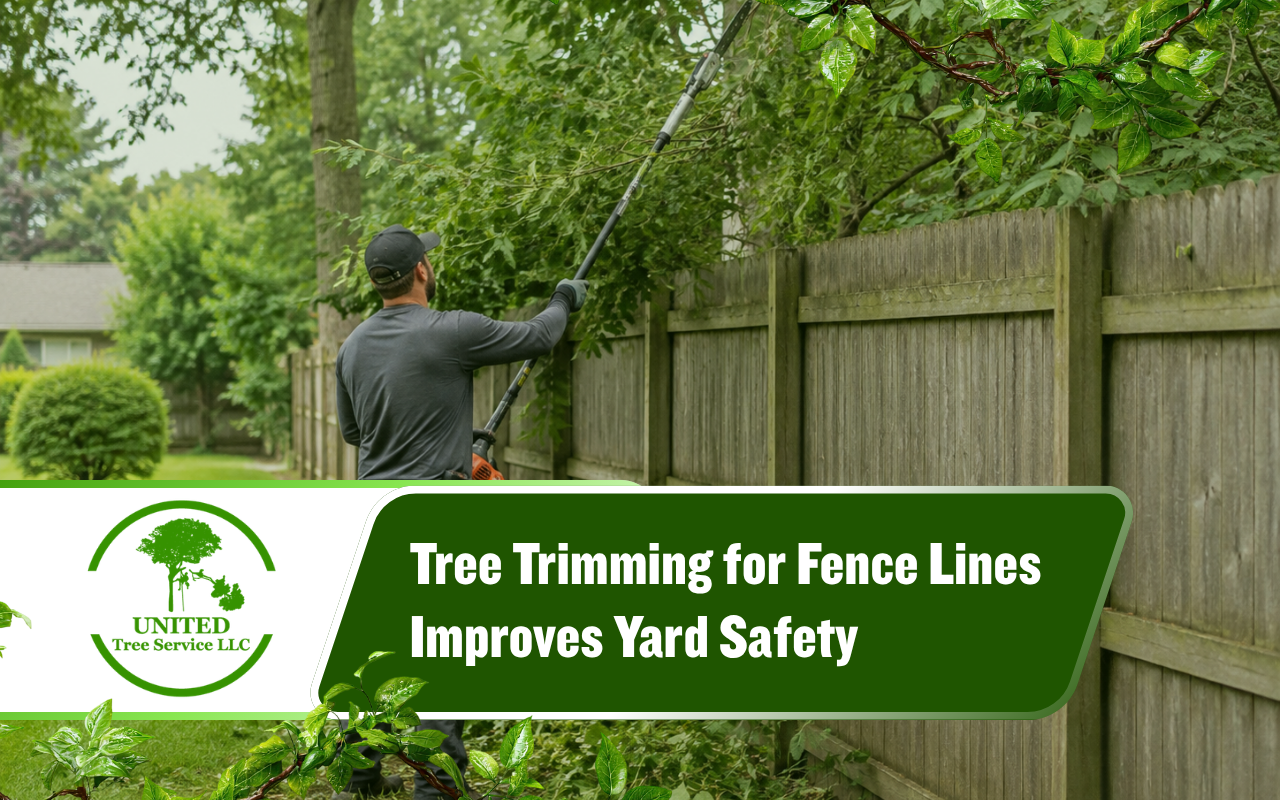
Tree trimming for fence lines keeps outdoor spaces neat, safe, and easy to enjoy. Overgrown limbs can block views, press against fences, and create tension with neighbors. At United Tree Service, LLC, we help homeowners manage growth carefully while protecting trees and property boundaries.
Regular trimming also supports healthier trees and cleaner yard edges. With good timing and clear communication, you can reduce problems before they grow. This guide explains practical ways to handle fence line growth.
Why Fence Line Tree Care Matters So Much
Branches that grow too close to a fence can scratch surfaces, add weight, or break during bad weather. Tree trimming for fence lines lowers these risks and keeps walkways, gates, and nearby areas easier to use. It also helps sunlight reach grass, shrubs, and smaller plants.
Careful fence line tree trimming removes weak or dead growth without harming the tree’s natural shape. For more guidance on routine care, visit our tree trimming and care guide.
Property Lines And Neighbor Concerns Need Clear Communication
Before cutting neighbor tree branches, first confirm where the property line sits. Local rules may allow trimming up to your boundary, but the work should not damage the tree. A calm talk with your neighbor can prevent confusion and make the next steps easier.
- Check surveys, markers, or property records before trimming.
- Explain which limbs are causing a problem.
- Agree on a safe and reasonable trimming plan.
When branches over fence areas affect both yards, clear communication often protects the relationship as much as the property itself.
Choosing Better Trees Can Reduce Future Fence Problems
Some trees naturally fit narrow spaces better than others. Slow-growing or narrow varieties may need less tree trimming for fence lines over time. Before planting, consider the tree’s mature height, canopy width, root spread, and distance from the fence.
Native trees can also be easier to manage because they often suit local weather and soil. Planning early can reduce future cutting, limit crowding, and keep your yard balanced as trees grow.
Seasonal Timing Makes Trimming Safer And More Effective
Late winter or early spring is often a good time for tree trimming for fence lines because many trees are still dormant. With fewer leaves, branch structure is easier to see, and careful cuts can support healthy new growth when the season changes.
- Remove dead or broken limbs when needed.
- Avoid major trimming during severe heat or storms.
- Select dry weather when possible.
Because tree types vary, the best timing may change. Our tree service selection guide can help you decide when professional support makes sense.
Simple Tools Help With Small Fence Line Jobs
Small branches can often be managed with hand pruners, loppers, or a pruning saw. However, larger limbs require more care. Always use sharp tools, stable footing, eye protection, and gloves. Never cut from an unsafe ladder position or reach beyond your balance.
At United Tree Service, LLC, we recommend professional help when limbs are large, high, or close to structures. Tree trimming for fence lines can become dangerous quickly when heavy branches shift or fall without warning.
Safe Pruning Protects Views Without Harming Trees
Good pruning removes only what is needed. Start with dead, crossing, or badly placed limbs, then open the view gradually. Avoid removing too much canopy at once because heavy cutting can stress the tree and cause weak new growth.
- Cut back to a healthy branch or trunk point.
- Keep the tree’s natural shape when possible.
- Do not leave long stubs after cutting.
For local service information, see our Baltimore tree trimming page or our Columbia tree trimming page.
Frequently Asked Questions
Can I trim branches that cross my fence?
In many areas, you may trim growth that reaches into your property, but local rules can differ. Avoid cuts that may seriously damage the tree, and speak with your neighbor first when possible.
How often should fence line trees be trimmed?
Most trees only need careful review once or twice a year. Fast growth, storm damage, or branches over fence sections may require extra attention.
Should I remove all overhanging limbs at once?
No. Removing too much at one time can weaken a tree. Gradual pruning is often safer, especially with mature trees.
When should I call a tree professional?
Call for help when limbs are large, high, near power lines, or difficult to reach safely. Professional equipment and experience can reduce risk.
Can trimming improve my backyard view?
Yes. Selective pruning can open sightlines while keeping enough healthy growth for shade, privacy, and tree stability.
Professional Support Keeps Fence Line Work Under Control
Large trees, heavy limbs, and difficult boundaries are easier to manage with trained help. At United Tree Service, LLC, we focus on safe cuts, clear communication, and practical results that protect both trees and property. Tree trimming for fence lines should improve your yard without creating new risks.
If you need help with overgrown limbs or neighbor tree branches, reach our team to discuss the safest next step for your property.