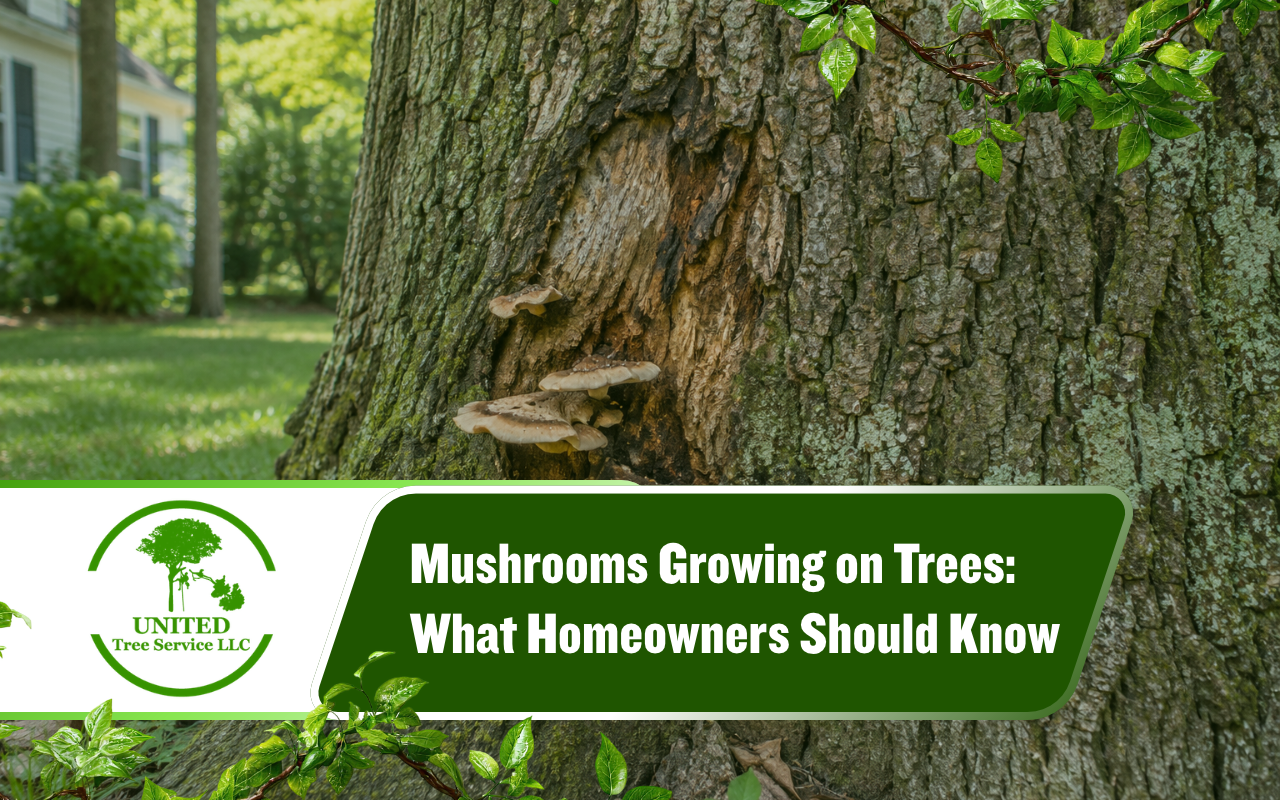
Finding mushrooms growing on tree trunks or near roots can raise concerns about your garden’s health. While some fungi grow on dead wood, others may signal hidden decay inside a living tree. Knowing the difference helps you protect your property and avoid unsafe conditions.
At United Tree Service, LLC, we encourage homeowners to watch for changes in their trees. Early attention can make a difference, especially when fungi appear alongside damaged bark, weak branches, or poor growth.
Common Mushroom Types Found on Trunks and Roots
Different mushrooms can grow on trees, and their appearance may offer clues about what is happening beneath the bark. Some feed on dead material, while others cause damage to living wood.
Common growths worth knowing include:
- Shelf mushrooms: Hard, flat growths that may indicate wood decay.
- Oyster mushrooms: Soft, layered caps often found on weakened wood.
- Turkey tail: Colorful, fan-shaped fungi commonly growing on dead wood.
- Honey fungus: Clustered mushrooms sometimes linked to root disease.
Because mushrooms on tree trunk surfaces can have different causes, appearance alone cannot confirm how safe a tree is.
Warning Signs That Reveal Hidden Tree Decay Problems
When mushrooms growing on tree surfaces appear with other changes, the tree may have internal damage. Fungi can break down wood over time, leaving branches or trunks weaker than they look.
Watch for these warning signs:
- Soft, dark, or crumbling wood around the trunk.
- Deep cracks or missing bark near mushroom growth.
- Dead branches and leaves falling earlier than expected.
- New mushrooms appearing around exposed roots.
- Sudden leaning or movement around the tree’s base.
For more guidance, review our warning signs that a tree may need removal.
How Fungal Growth Affects Tree Strength and Safety
Some fungi slowly break down the wood that supports a tree. As decay spreads, branches can become weaker, and damaged roots may lose their grip on the soil. This creates greater concerns during storms.
A fungus at the base of a tree may indicate problems beneath the ground. However, not every mushroom means removal is necessary. Our team examines visible damage and surrounding conditions before recommending the next step.
Potential Property Hazards Linked to Fungal Tree Damage
Ignoring mushrooms growing on tree trunks can be risky when decay is already present. Large branches may break, and severely weakened trees can fall without much warning. Nearby homes, vehicles, fences, and walkways may be affected.
Furthermore, certain fungal diseases can affect nearby trees under suitable conditions. Understanding the dangers of dead and weakened trees can help you make safer decisions. Keep children and pets away from unknown mushrooms because some species are poisonous if eaten.
Safe Steps for Managing Mushrooms Around Your Trees
Finding mushrooms does not always mean your tree is beyond saving. However, removing visible mushrooms will not repair decay already inside the wood. Instead, focus on safe care and identifying the cause.
Our recommended steps include:
- Keep mulch away from the trunk to reduce trapped moisture.
- Check drainage and avoid watering the tree too often.
- Photograph new growth to track changes over time.
- Avoid cutting into affected wood without professional guidance.
- Request an assessment when mushrooms return or damage increases.
At United Tree Service, LLC, we help homeowners consider safe options when fungal damage raises concerns.
Professional Tree Care When Fungal Damage Becomes Serious
When mushrooms growing on tree roots or trunks appear with serious damage, professional attention becomes important. A trained tree care specialist can examine visible decay, weak branches, and nearby hazards to determine whether further testing is needed.
Sometimes, a diseased tree removal service is the safest option. Our team at United Tree Service, LLC can discuss professional tree removal in Maryland when keeping a damaged tree creates unacceptable risks.
Frequently Asked Questions
Are mushrooms growing on trees always dangerous?
No. Some fungi grow on dead wood without creating an immediate danger. However, mushrooms on living trees deserve attention because they may indicate decay.
Can removing mushrooms stop tree decay completely?
No. Removing visible mushrooms does not remove fungi growing inside the wood. Proper inspection helps identify whether the tree needs additional care.
Does fungus near tree roots mean removal?
Not always. A fungus at the base of the tree may signal root problems, but the decision depends on the amount of damage and the tree’s stability.
Can fungal problems spread to nearby healthy trees?
Some fungal diseases can spread through roots, wounds, or other pathways. However, the risk depends on the fungus and local conditions.
When should homeowners request professional tree care?
Seek help when mushrooms appear with cracks, dead branches, leaning, or soft wood. These signs may point to serious structural concerns.
Long-Term Tree Care for a Safer Garden
Healthy trees need regular observation, suitable watering, and proper care. After finding mushrooms growing on tree surfaces, continue checking for new growth, bark changes, and damaged branches. These simple habits can help you notice problems sooner.
At United Tree Service, LLC, we believe informed decisions protect both trees and properties. If fungal growth raises safety concerns, connect with us to discuss your situation and the safest way forward.