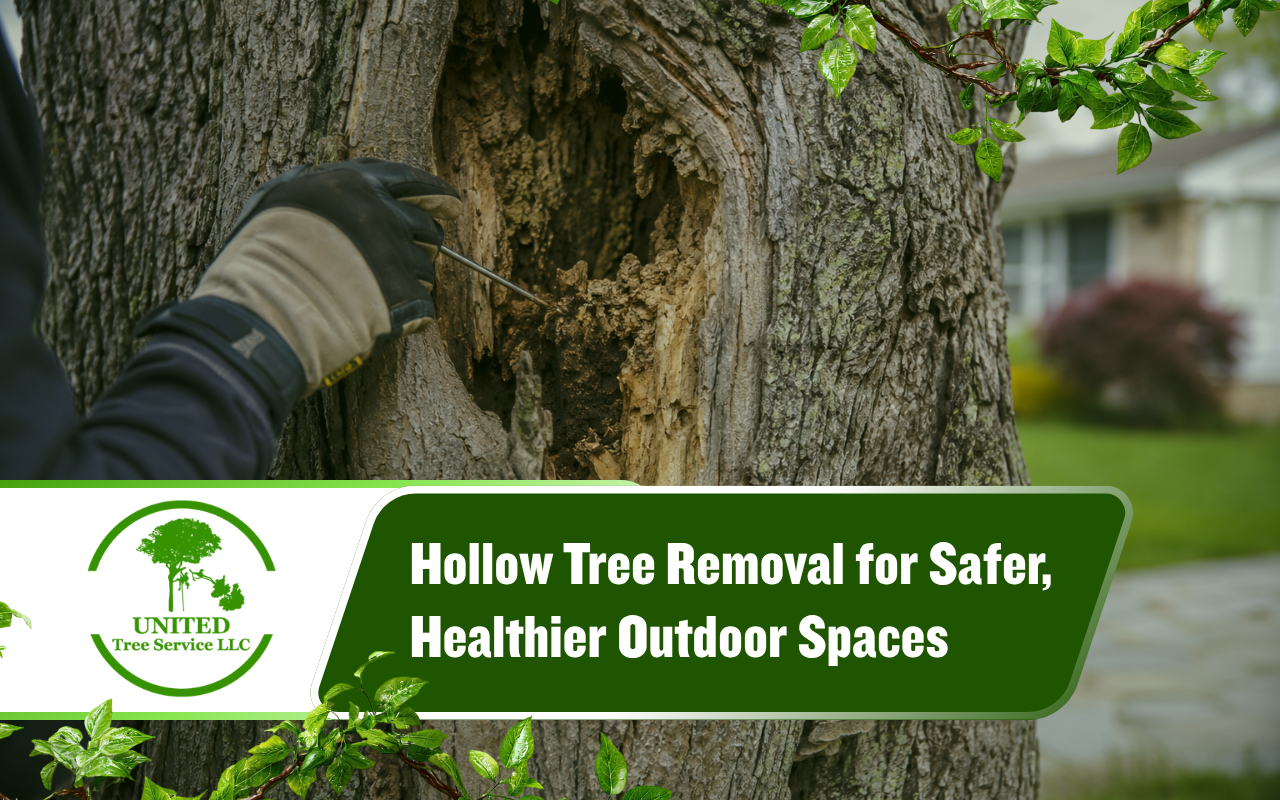
Hollow tree removal becomes important when internal decay weakens a tree and turns it into a risk. Cavities can form because of age, pests, disease, storm damage, or poor pruning.
At United Tree Service, LLC, we help property owners spot warning signs and choose a safe next step. This guide explains how to identify a hollow trunk tree, understand the risk, and protect your yard before hidden damage leads to an emergency.
Common Warning Signs That Reveal Hidden Tree Cavities
Start by checking the trunk, bark, and tree base. Deep cracks, peeling bark, soft wood, or rounded openings may show that decay has spread inside. Mushrooms near the roots or trunk can also point to moisture and rotting wood below the surface.
- Open cavities or visible holes in the trunk
- A hollow sound when the trunk is tapped
- Wood dust, insects, or damp material near openings
- Dead branches or sudden leaf loss above the cavity
A hollow trunk tree may look stable from one side, yet be weak inside. Our Maryland tree removal services page explains how trained crews manage unsafe trees.
Hollow Trees Can Become Serious Property Hazards
Hollow tree danger grows as decay removes the wood that carries weight. Large limbs may break during wind, rain, or snow. In severe cases, the whole tree can split or fall toward a home, fence, vehicle, driveway, or play area.
Wildlife may also use cavities for shelter. Although this is natural, movement inside the trunk can widen weak areas. Before any work begins, a tree removal company should check the tree, nearby structures, and possible nesting activity.
Regular Tree Inspections Help Prevent Sudden Structural Failure
Yearly inspections can reveal changes before they become urgent. Walk around the tree after major storms and look for new cracks, leaning, exposed roots, or broken limbs.
At United Tree Service, LLC, we use careful visual checks and field experience to assess risk. Our guide on the risks of dead and weakened trees shares more warning signs that deserve quick attention.
Simple Ground Checks You Can Perform Safely Yourself
Basic checks can help you decide when to call a professional. However, do not climb the tree, cut into the trunk, or stand under damaged branches. Keep children and pets away while you inspect the tree from the ground.
- Tap the trunk gently and listen for a clear echo.
- Use a flashlight to view open cavities from a distance.
- Check for soft bark, loose wood, or moisture.
- Stop if the tree shifts, cracks, or drops debris.
These steps do not replace a full assessment. Hollow tree removal should only move forward after the tree’s condition, fall path, and nearby risks are understood.
Professional Removal Planning Protects People And Nearby Property
A skilled tree removal company plans each job around the tree’s weakness, size, location, and access. Crews may remove branches in sections, use ropes to guide heavy pieces, and control the final trunk drop. This reduces damage to lawns, roofs, fences, and nearby trees.
Our team at United Tree Service, LLC, explains the work before cutting begins. You can also read our tips for choosing qualified removal professionals when comparing experience, insurance, safety steps, and cleanup plans.
Clear Work Zones Reduce Risks During Tree Removal
A clear work zone keeps people away from falling wood and moving equipment. Vehicles, outdoor furniture, toys, and garden tools should be moved before the crew arrives.
- Keep family members and pets indoors
- Follow crew instructions around the marked area
- Move fragile items away from the tree
- Confirm cleanup and debris plans before work starts
Weather matters too. Strong wind or heavy rain can make hollow tree removal less predictable, so professionals may adjust the schedule to protect everyone on site.
Frequently Asked Questions
Can a hollow tree remain standing safely?
Sometimes, but only after a professional review. The size, location, and remaining solid wood all affect stability.
Does every cavity require full tree removal?
No. Some trees can be monitored or pruned, while others need removal because the trunk can no longer carry weight safely.
How quickly should a hollow tree be checked?
Arrange an inspection soon, especially after storms, new leaning, falling branches, or fresh cracks.
Can insects make the cavity worse?
Yes. Insects can enter damaged wood and help decay spread into weak areas.
Who should handle the final decision?
A qualified tree removal company should assess the tree and explain the safest option for your property.
Protect Your Yard With Timely Professional Tree Support
Fast action can prevent damage, protect nearby plants, and restore peace of mind. Hollow tree removal is often safer before the tree leans, splits, or drops heavy limbs. Responsible crews can also chip branches, remove logs, and leave the work area clean.
For local details, review our Towson tree removal options. When you are ready to discuss your tree, contact us for a safety assessment and a clear hollow tree removal plan.