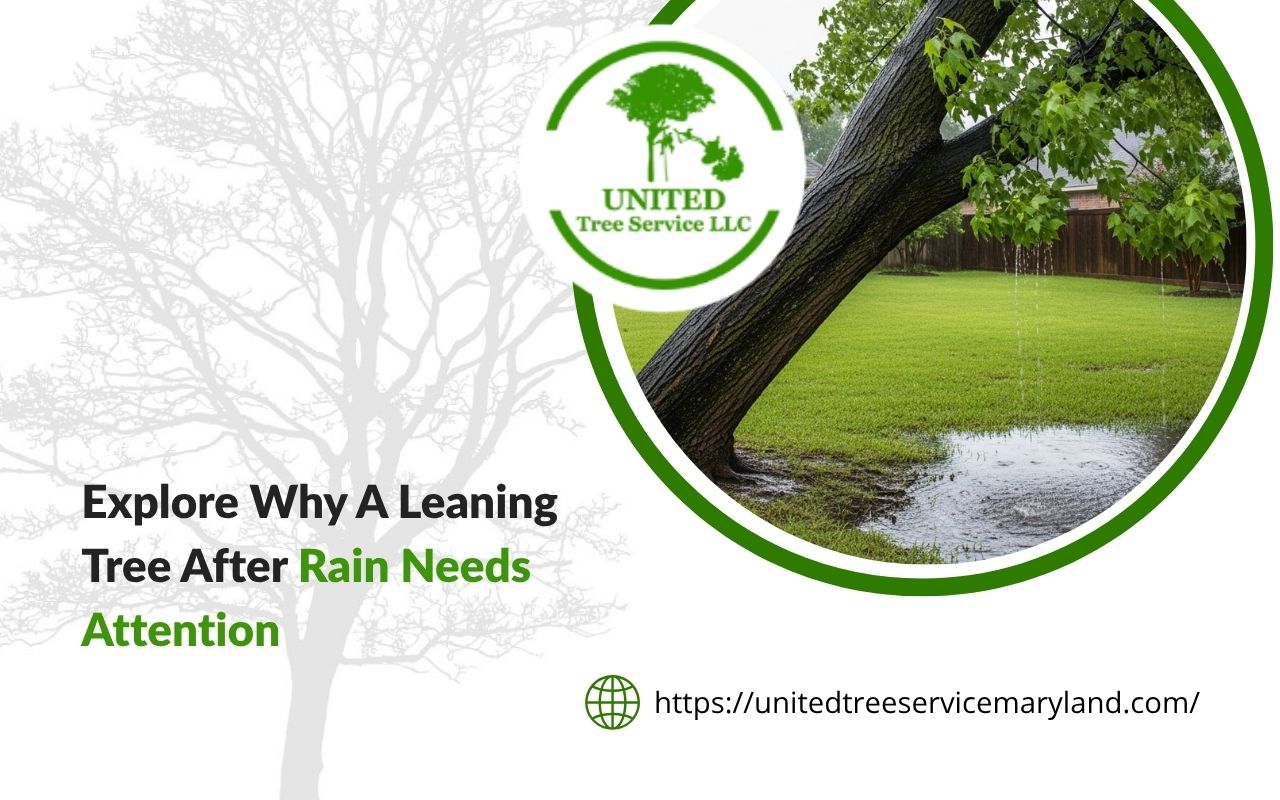
A leaning tree after rain can turn a quiet yard into a serious safety concern. Heavy water, soft soil, and wind can change how firmly roots hold the ground, even when the tree looked stable before the storm.
At United Tree Service LLC, we look at each situation with care because every tree reacts differently. Therefore, understanding the warning signs helps you decide when simple care is enough and when expert help is needed.
Main causes behind a leaning tree after rain
Rain can soften the ground around the roots and reduce the support that keeps a tree upright. As a result, the tree may shift, especially when the canopy is heavy or the roots are already weak.
A tree leaning after storm conditions may also point to hidden damage below the soil. For related warning signs, you can review our guide on tree hazards and dead wood risks.
Wet soil can quickly weaken tree stability outdoors
Wet soil tree risk increases when water fills the small spaces between soil particles. Because roots need firm contact with the ground, soaked soil can make that hold weaker and less reliable.
- Soft ground around the trunk
- New cracks in the soil
- Raised roots on one side
- Fresh tilting after rainfall
However, not every leaning tree must come down. Our team checks the soil, root area, and trunk movement before recommending the safest next step.
Storm winds add pressure to already weakened roots
Wind can push against branches like a wide sail. When the ground is wet, that pressure may pull roots loose and make a small lean grow worse.
Therefore, trees in open yards, near driveways, or beside homes need close attention after strong gusts. For trees that may need removal, our Maryland tree removal service information explains how safe removal is handled.
Tree age and health shape leaning risks
A young tree may lean because its roots are not wide or deep enough yet. On the other hand, an older tree may lean because decay, disease, or dead limbs have weakened its structure.
A leaning tree after rain can be more dangerous when there are mushrooms, hollow spots, peeling bark, or large dead branches. In these cases, we can inspect the tree and explain clear options.
Roots are the tree’s main support, yet most of that support is underground. Because of this, root damage may stay hidden until heavy rain makes the tree shift or lean.
- Recent digging near the tree
- Heavy equipment over the roots
- Poor drainage around the yard
- Soil washing away near the base
If the lean appears near a home, fence, or street, quick action matters. Our page about when tree removal may be needed can help you understand common risk factors.
Simple steps help reduce future leaning hazards
Good drainage is one of the best ways to lower future risk. In addition, pruning can reduce extra weight in the canopy, which helps the tree handle rain and wind more safely.
- Keep mulch away from the trunk
- Remove dead or broken limbs
- Watch for new soil cracks
- Schedule inspections after major storms
When a tree is too close to a structure, our Baltimore tree removal team can review the safest solution for the property.
Frequently Asked Questions
Is a leaning tree after rain always dangerous?
Not always, but it should be checked. A small lean may be stable, while a sudden lean can mean the roots lost support.
Can wet soil cause a tree to fall?
Yes. When soil stays soaked, roots may lose grip, especially if wind or root damage is also present.
Should I try to straighten the tree myself?
No. Pulling or staking a tree without the right method can cause more damage and may create a safety risk.
When should I call a professional team?
Call when the lean is new, the soil is lifting, roots are exposed, or the tree is near people, power lines, or buildings.
What if I need a tree removal service near me?
Choose a trained local team that can inspect the tree first, explain the risk, and remove it safely when needed.
Safe tree decisions protect homes after heavy rain
A leaning tree after rain should never be ignored, especially when the lean appears suddenly. Fast checks can prevent damage, injury, and larger problems during the next storm.
At United Tree Service LLC, we are ready to help you make a safe decision with clear guidance. To ask for assistance, stop by our contact page for tree service support.