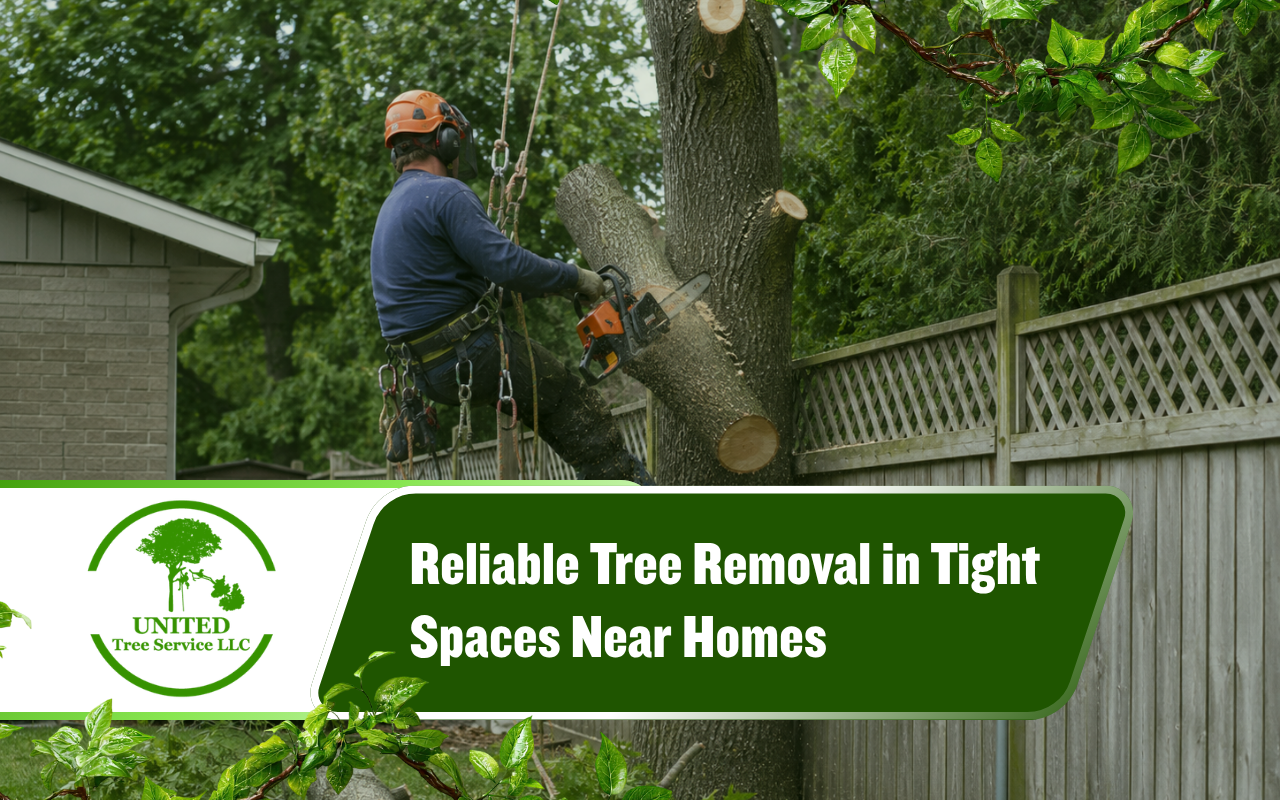
Tree removal in tight spaces can feel stressful when a trunk stands close to a fence, home, shed, or narrow gate. However, careful planning can make the job safer. At United Tree Service, LLC, we focus on controlled work that protects your property at every step.
Every yard is different, so the right approach starts with space, tree condition, and nearby risks. For tree removal in tight spaces, knowing what to check can help prevent damage and show when professional support is best.
Start With A Careful Tree And Site Check
Before cutting begins, check the tree from top to bottom. Look for dead branches, cracks, leaning sections, weak areas, and roots near walkways or foundations. Then measure the space between the tree and nearby walls, fences, wires, and vehicles.
Next, note safe drop zones and exit paths. For tree removal in tight spaces, even a small obstacle can affect how branches are lowered. A simple site check helps us plan safer cuts and reduce surprises during the job.
Opt for Tools That Match Small Working Areas Safely
For tree removal in tight spaces, tools must give good control. Large equipment may not fit through gates, so smaller cutting tools and rope systems can work better. Our Maryland tree removal services are planned around the space available.
- Compact saws for controlled cutting
- Pruning tools for smaller branches
- Ropes and slings for lowering sections
- Protective helmets, gloves, and boots
Build A Clear Plan Before Cutting Begins
A good plan shows what will be cut first, where each piece will move, and who must stay outside the work area. During tree removal in tight spaces, branches are often removed in smaller sections instead of allowing large pieces to fall freely.
At United Tree Service, LLC, we use the site layout to guide the removal order. If you are searching for tree removal near me because a tree is close to your home, our tree project contact page makes it easy to discuss access and risks.
Use Controlled Pruning To Reduce Removal Risks
Pruning can reduce weight before larger sections are removed. Smaller limbs are usually taken first, which creates more room around the trunk. This step is especially useful for backyard tree removal where fences, patios, or nearby homes limit open space.
- Remove light outer branches first
- Keep cut pieces small and manageable
- Clear pathways before moving larger wood
- Avoid standing below active cutting areas
For more guidance on careful cutting work, visit our tree cutting service information.
Protect Nearby Property With Controlled Rigging Methods
Rigging controls where branches and trunk sections travel after each cut. Ropes can guide wood away from roofs, fences, windows, and gardens. For tree removal in tight spaces, this control matters because there may be little room for error.
Each rope point must be secure before weight is added. Sections should be lowered slowly and kept clear of people below. Controlled methods help reduce sudden swings and contact with nearby structures.
Keep People And Property Outside Work Zones
A clear work zone protects family members, pets, neighbors, and workers. Before tree removal in tight spaces, move vehicles, furniture, toys, and loose items away from the tree. Barriers can show where people should not enter.
- Keep children and pets indoors
- Move vehicles away from falling debris
- Keep tools outside active drop zones
- Tell neighbors about shared-area concerns
When access is narrow, our tree care service options can help you understand what support may fit the property.
Frequently Asked Questions
Can a large tree be removed from small yards?
Yes. A large tree can often be removed in sections when open space is limited. Tree removal in tight spaces usually depends on careful cutting, rigging, access, and the condition of the tree.
Is backyard tree removal safe near a fence?
It can be, but the fence must be included in the work plan. Controlled lowering and smaller cuts can reduce the chance of damage.
What makes limited access tree removal more difficult?
Narrow gates, nearby buildings, power lines, slopes, and small drop zones can make the work harder. These factors often require more planning and control.
When should I search for tree removal near me?
Professional help is a smart choice when the tree is large, damaged, leaning, or close to structures. Skilled crews can manage risks that are difficult to handle alone.
How long does a tight-space removal usually take?
Time depends on tree size, access, condition, and obstacles. A site review shows the work needed.
Finish With Cleanup And A Safer Yard
After the tree is down, cleanup should include branches, logs, wood chips, and loose debris around the work area. The stump and exposed roots should also be checked for trip risks. Tree removal in tight spaces is not complete until the area is safe and usable again.
At United Tree Service, LLC, we aim to leave each property organized after the work is finished. For help with a difficult location, review our Glen Burnie tree removal service or reach out to our team about your yard.