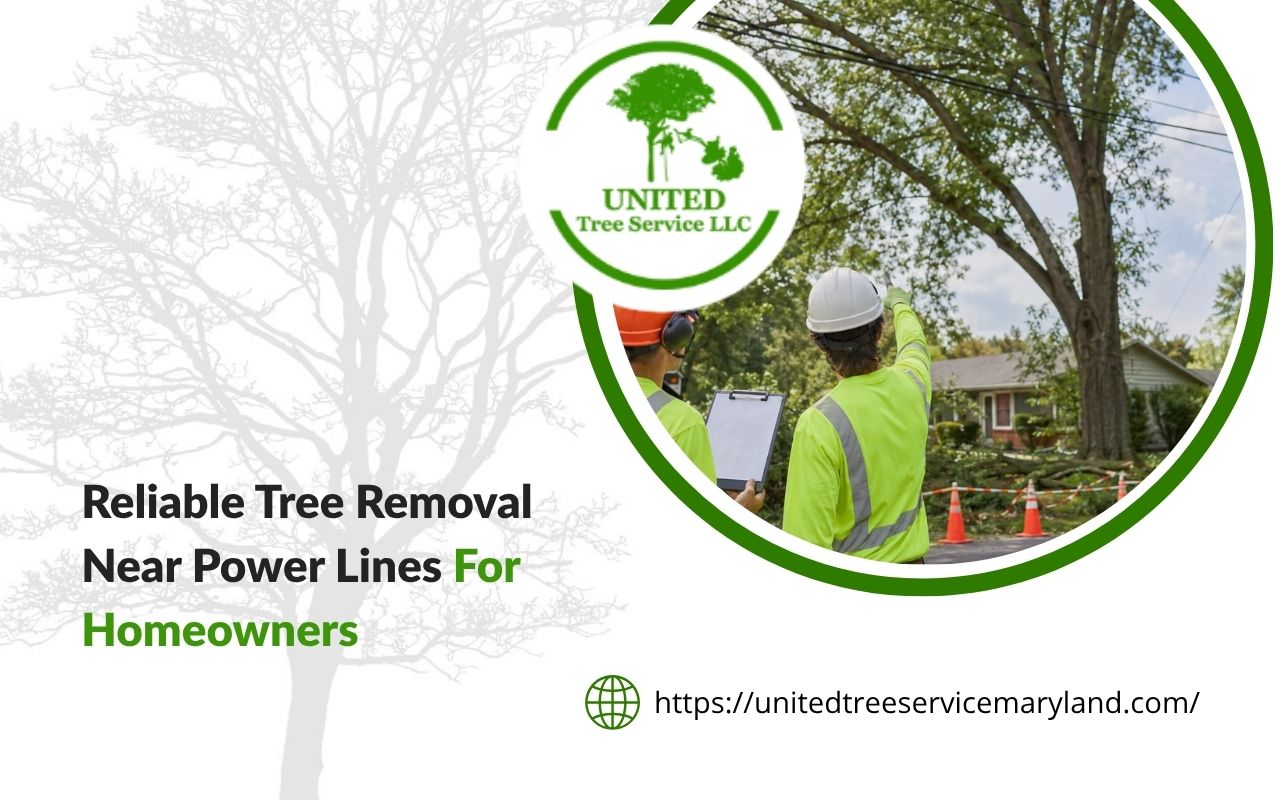
Tree removal near power lines needs care, planning, and the right team. Trees that grow close to wires can cause outages, property damage, or serious injury. At United Tree Service LLC, we guide homeowners and property managers with safe steps that protect people, homes, and nearby streets.
Because every tree and property is different, the work should never be rushed. A safe plan looks at the tree’s health, wire distance, weather risk, and site access. Also, it helps decide when normal service or emergency tree removal is the safer choice.
Warning signs around trees and nearby electrical lines
A tree near power lines can become unsafe when branches touch wires, lean toward poles, or break during storms. Dead limbs, trunk cracks, and weak roots also raise the risk. Therefore, early checks can help avoid dangerous tree removal later.
- Branches growing close to overhead wires
- A leaning trunk or uneven canopy growth
- Dead limbs hanging above yards or driveways
- Roots lifting soil near poles or sidewalks
Tree removal near power lines should be considered when these signs appear together. Photos and simple notes can help explain the problem when you contact a tree care team or your utility provider.
Local rules that guide safe tree work
Many areas have rules for tree work near electrical lines. These rules may cover safe distance, permits, and utility company notice. As a result, homeowners should not cut or prune branches that may touch active wires.
Our team checks safety needs before work begins. For planned removals, you can review our local options through our Maryland tree removal services page. This helps you understand when trained help is the safer path.
Qualified crews make risky removals much safer
Dangerous tree removal calls for people with the right tools, training, and insurance. A careful crew inspects the tree, checks nearby wires, and explains the safest method before cutting starts. This keeps the job clear and controlled.
At United Tree Service LLC, we focus on safe planning before any branch comes down. For city properties, our Baltimore tree removal support can help when trees grow close to homes, fences, streets, or power lines.
Planning tree removal near power lines with care
A clear plan reduces mistakes during tree removal near power lines. The plan should show the tree location, wire position, drop zone, and access path. It should also include how branches will be lowered without hitting wires or nearby structures.
- Mark the safest work area before equipment arrives
- Confirm who will contact the utility company
- Choose safe cutting and lowering methods
- Keep people, pets, and vehicles away from danger zones
Good planning also prepares for bad weather, soft ground, or blocked access. In addition, it helps the crew adjust safely if the tree shifts or a limb breaks sooner than expected.
Safety steps used during the removal process
Safety starts before the first cut. Barriers, warning tape, and clear communication help keep people away from the work zone. Workers also need helmets, eye protection, gloves, and stable equipment suited for high-risk tree work.
When a tree near power lines is unstable, the crew may use ropes, lifts, or cranes to control each section. This careful process helps prevent sudden drops and protects nearby wires, roofs, and walkways.
When emergency help becomes the best option
Emergency tree removal is needed when a tree falls onto wires, blocks access, or threatens a home after a storm. In these moments, do not touch the tree, branches, or nearby metal objects. Live wires can be deadly.
- Stay far away from fallen wires and branches
- Call the utility company when wires are involved
- Keep children and pets inside until help arrives
- Request trained support for urgent tree hazards
When homeowners contact United Tree Service LLC, we explain the safest next step for urgent tree problems. You can also visit our emergency tree removal support page for storm-related concerns.
Frequently Asked Questions
Can I trim branches touching power lines myself?
No. Branches near active wires can carry electricity. It is safer to contact your utility company or a trained tree crew before anyone cuts the tree.
Who should I call first for a fallen tree?
If wires are involved, call the utility company first. Then contact a trained tree service for safe removal once the electrical risk is controlled.
How close is too close to power lines?
If branches are near, touching, or growing toward wires, the tree should be checked. A professional can judge the risk based on distance, health, and lean.
Is dangerous tree removal covered by insurance?
Coverage depends on your policy and the cause of damage. Photos, notes, and a professional report may help when you speak with your insurance company.
What happens after the tree is removed?
The crew clears branches, checks the area, and may grind the stump if needed. After that, the site should be safe, clean, and easier to maintain.
Clean sites and safer properties after removal
After tree removal near power lines, cleanup is an important final step. Branches, logs, and debris should be removed from paths, lawns, and driveways. This helps prevent trips, pests, and future property damage.
With United Tree Service LLC, you get clear guidance from the first call to final cleanup. For questions about service timing or urgent risks, use our contact page to reach our team.