Notice how trees change as winter nears in Maryland. Their green canopies fade, and branches turn bare. However, beneath this calm scene, trees may be quietly struggling.
Winter tree disease signs in Maryland can appear fast and stay hidden. Therefore, learning the clues helps protect tree health. From cankers to bark cracks, each symptom can point to trouble. Also, you may notice fungal fruiting bodies or dieback. If you act early, you can reduce lasting damage.
Common Winter Tree Diseases in Maryland
Maryland winters bring cold, wet conditions that stress many trees. As a result, some germs spread more easily. Winter tree disease signs in Maryland often show up on bark, limbs, or the trunk base.
- Cankers that look sunken or dark
- Fungal fruiting bodies like small shelves or mushrooms
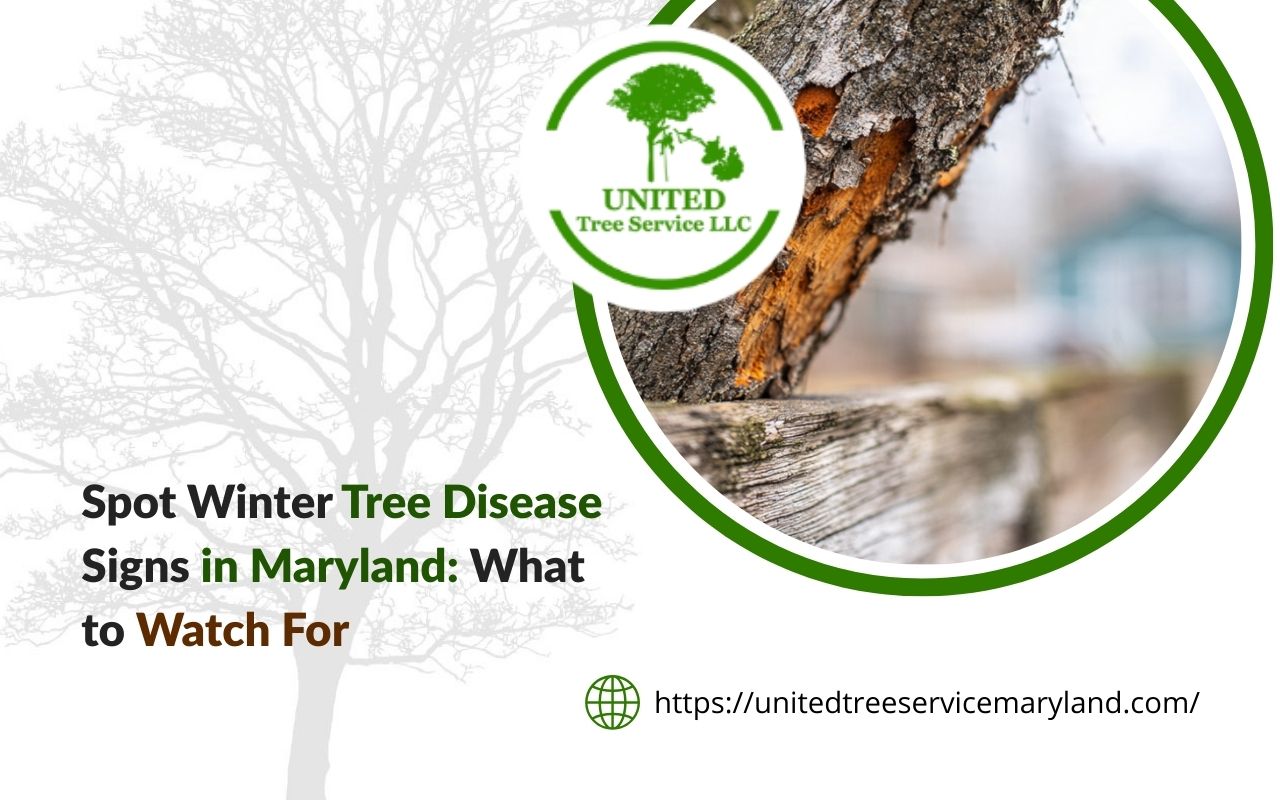
- Bark cracks after sharp temperature swings
- Dieback at branch tips
United Tree Service LLC often sees these issues start small. Then, they grow worse during freeze-thaw cycles. For ongoing seasonal guidance, explore Maryland tree care for practical steps that fit local conditions.
How to Identify Cankers
Cankers are common winter tree disease signs in Maryland. They often begin where bark is already weak. At first, you may see a small dark patch. Then, the spot can sink and widen.
- Look for sunken areas on branches or the trunk
- Check for discoloration around a wound
- Notice peeling bark near the damaged zone
Because winter weather can worsen damage, cracks may form around the infected area. Consequently, water and food flow can be blocked. If a canker circles a limb, that limb may fail later. United Tree Service LLC recommends removing affected parts when it is safe and suitable.
Understanding Bark Cracks and Why They Matter
Bark cracks can form when temperatures rise and drop quickly. Although a crack is not always an illness, it can invite problems. Therefore, it helps to check trunks after cold snaps.
- Vertical splits along the trunk
- Fresh openings that look light or wet inside
- Old scars that reopen after hard freezes
When openings stay exposed, germs can enter and start decay. As a result, the trunk may weaken over time. United Tree Service LLC can help you decide if a crack is only weather stress or a bigger concern.
Recognizing Fungal Fruiting Bodies
Fungal fruiting bodies can be a strong warning sign. They may look like mushrooms or shelf-like growths. Even so, the visible growth is often only part of the issue.
When you see fungal fruiting bodies, decay may already be inside the wood. Consequently, limbs can break more easily under ice or snow. United Tree Service LLC suggests you note the location and size, then plan next steps. Also, avoid knocking growths off, since the deeper decay remains.
What Dieback Looks Like in Winter
Dieback means branch tips slowly stop living. You may spot it late winter or early spring. However, the stress often begins earlier.
Look for brown tips, fewer buds, or thin outer branches. As dieback spreads, the tree may look sparse. Moreover, weak areas can attract insects and more decay. If you prune, use clean tools and remove only what is needed.
Frequently Asked Questions
1) What are the most common winter tree disease signs in Maryland?
The most common signs include cankers, bark cracks, fungal fruiting bodies, and dieback. Also, you may notice sunken bark or weak branch tips.
2) Are bark cracks always a sign of disease?
Not always. However, cracks can let germs enter. Therefore, they can lead to future decay if ignored.
3) If I see fungal fruiting bodies, is the tree already damaged?
Often, yes. Because these growths can appear after decay starts inside wood, it is wise to assess the tree soon.
4) Can I manage cankers on my own?
Sometimes. Yet, if the canker is large or on the main trunk, professional help is safer and more effective.
5) When should I contact an arborist in Maryland?
If winter tree disease signs in Maryland appear on major limbs, or if you see repeat dieback, you should seek an expert review.
Early Detection and Smart Diagnosis
Spotting winter tree disease signs in Maryland early can prevent major loss. Therefore, inspect bark, limbs, and the trunk base often. Use a small magnifier if you have one. Also, track where symptoms appear and whether they spread.
Even a simple crack can have different causes. So, careful checks matter. United Tree Service LLC can help confirm what you are seeing and suggest next actions that fit the tree and the site.
Preventive Steps for a Healthier Winter
Healthy trees handle winter stress better. Therefore, good care in fall and early winter matters. Winter tree disease signs in Maryland are less likely when trees start the season strong.
- Water deeply in fall when soil is dry
- Add 2–4 inches of mulch, keeping it off the trunk
- Prune dead or rubbing branches before harsh weather
- Clean tools between cuts to avoid spreading germs
Also, avoid trunk injuries from mowers and trimmers. For more practical routines, review these essential tree care tips to match your yard’s needs.
When to Call a Pro for Tree Assessment
Sometimes symptoms go beyond basic care. If winter tree disease signs in Maryland look severe, expert support can reduce risk. Professionals can check wood strength and hidden decay. Moreover, they can plan safer pruning during winter conditions.
If you want help from United Tree Service LLC, reach out through the contact page to discuss what you are seeing and what to do next.
Protecting Maryland’s Trees for the Future
By watching for winter tree disease signs in Maryland, you can act before damage grows. Cankers, bark cracks, fungal fruiting bodies, and dieback all offer useful clues. Therefore, regular checks and simple care steps can make a real difference.
When you are unsure, professional guidance helps you protect trees and property. With steady winter care, Maryland’s trees can stay strong for years to come.